power out

In the event your home loses power, report it to your local electric cooperative. We have website links, phone numbers and live outage maps below. 

The Electric Cooperatives of South Carolina Outage Map shows the most recent outage information available from 18 of the state’s independent, member-owned electric cooperatives. In addition, some cooperatives post outage information on their Facebook and Twitter accounts. Make sure you follow your local co-pop on social media for the latest outage information.

Refer to the list below for contact information for your cooperative.

Aiken Electric Cooperative

Berkeley Electric Cooperative

Black River Electric Cooperative

  • 1-803-469-8060 (Monday – Friday, 8 a.m. – 5 p.m.)
  • 1-844-431-2732 (after 5 p.m. or weekends)

Blue Ridge Electric Cooperative

Broad River Electric Cooperative

Coastal Electric Cooperative

Edisto Electric Cooperative

Fairfield Electric Cooperative

Horry Electric Cooperative

Laurens Electric Cooperative

Little River Electric Cooperative

Lynches River Electric Cooperative

Mid-Carolina Electric Cooperative

Newberry Electric Cooperative

Palmetto Electric Cooperative

  • 1-866-445-5551
  • Link to live outage map
  • Members can also report outages through MyEnergy Online and the MyEnergy mobile app. 

Santee Electric Cooperative

Tri-County Electric Cooperative

York Electric Cooperative

downed-power lines

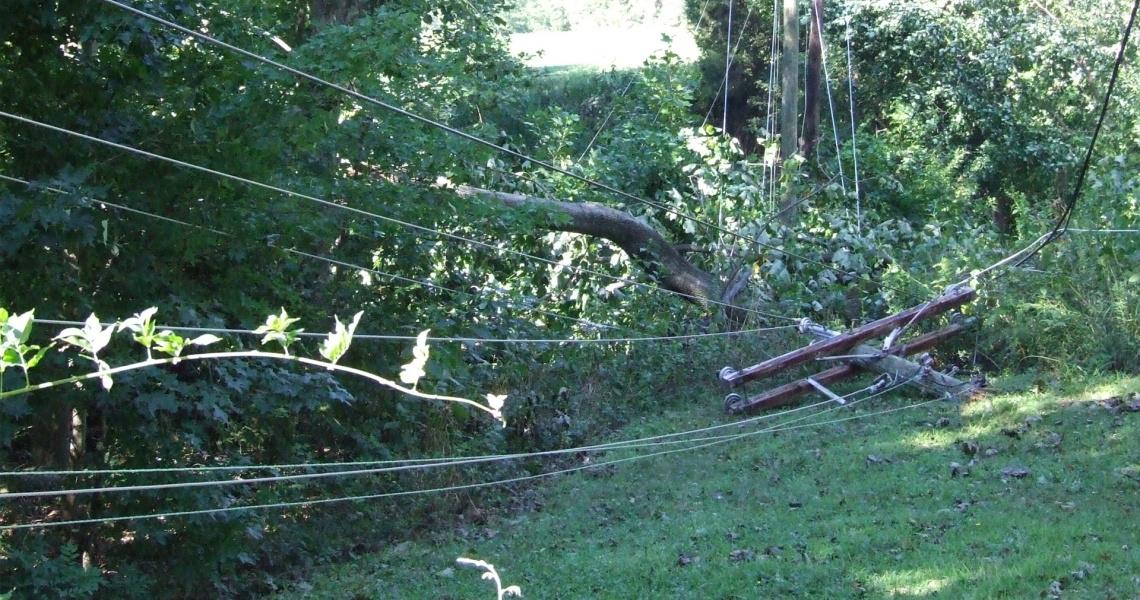
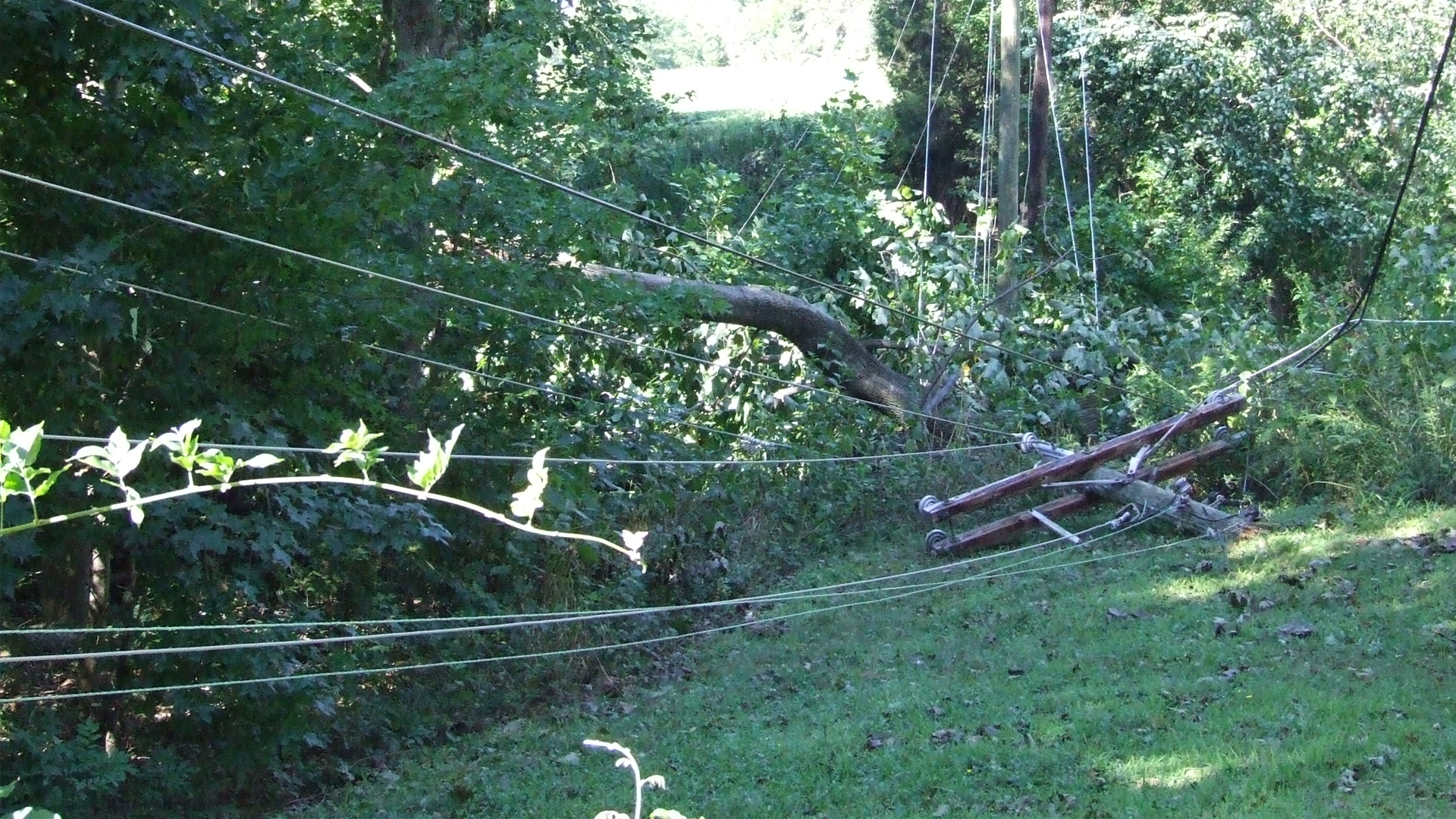
Downed power lines can look relatively harmless, but don't be fooled. They likely carry an electric current strong enough to cause serious injury or possibly death. These tips can help you stay safe around downed lines:

  • If you see a downed power line, move away from the line and anything touching it.
  • The proper way to move away from the line is to shuffle with small steps, keeping your feet together and on the ground at all times. This will minimize the potential for a strong electric shock. Electricity wants to move from a high voltage zone to a low voltage one—and it could do that through your body.
  • If you see someone who is in direct or indirect contact with the downed line, do not touch the person. You could become the next victim. Call 911 instead.
  • Do not attempt to move a downed power line or anything in contact with the line by using another object such as a broom or stick. Even normally non-conductive materials like wood or cloth, if slightly wet, can conduct electricity and electrocute you.
     
  • Be careful not to put your feet near water where a downed power line is located.
     
  • Do not drive over downed lines.
     
  • If you are in a vehicle that is in contact with a downed line, stay in the vehicle. Honk your horn for help and tell others to stay away from your vehicle.
     
  • If you must leave your vehicle because it’s on fire, jump out of the vehicle with both feet together and avoid making contact with the energized vehicle and the ground at the same time. This way you avoid being the path of electricity from the vehicle to the earth.

restoring power

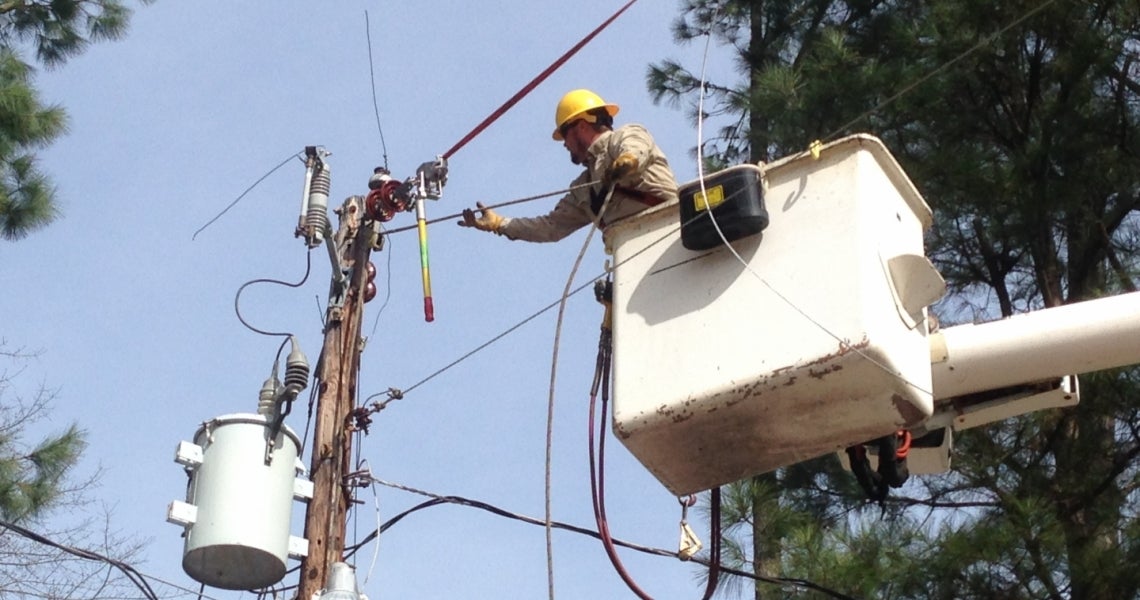
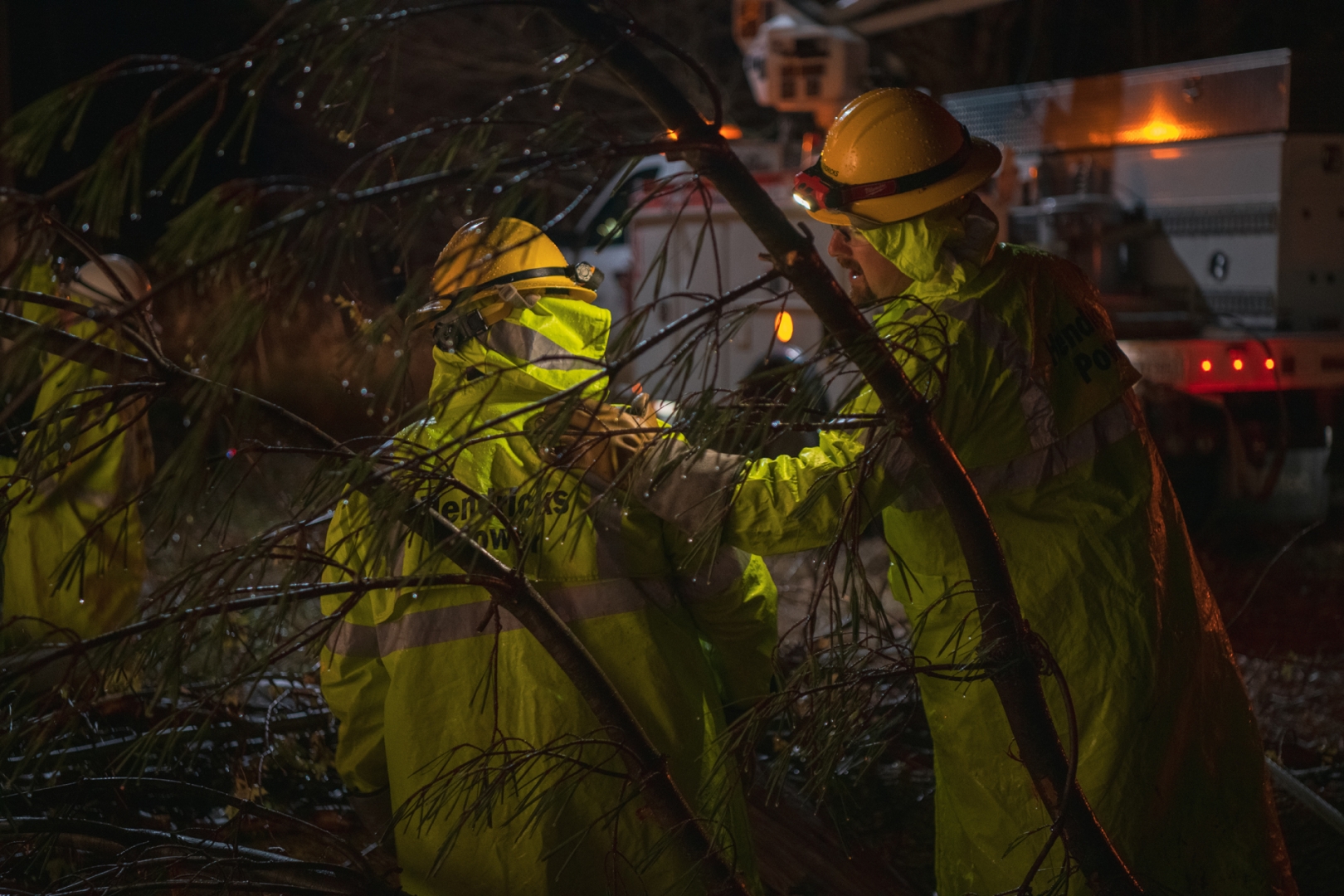
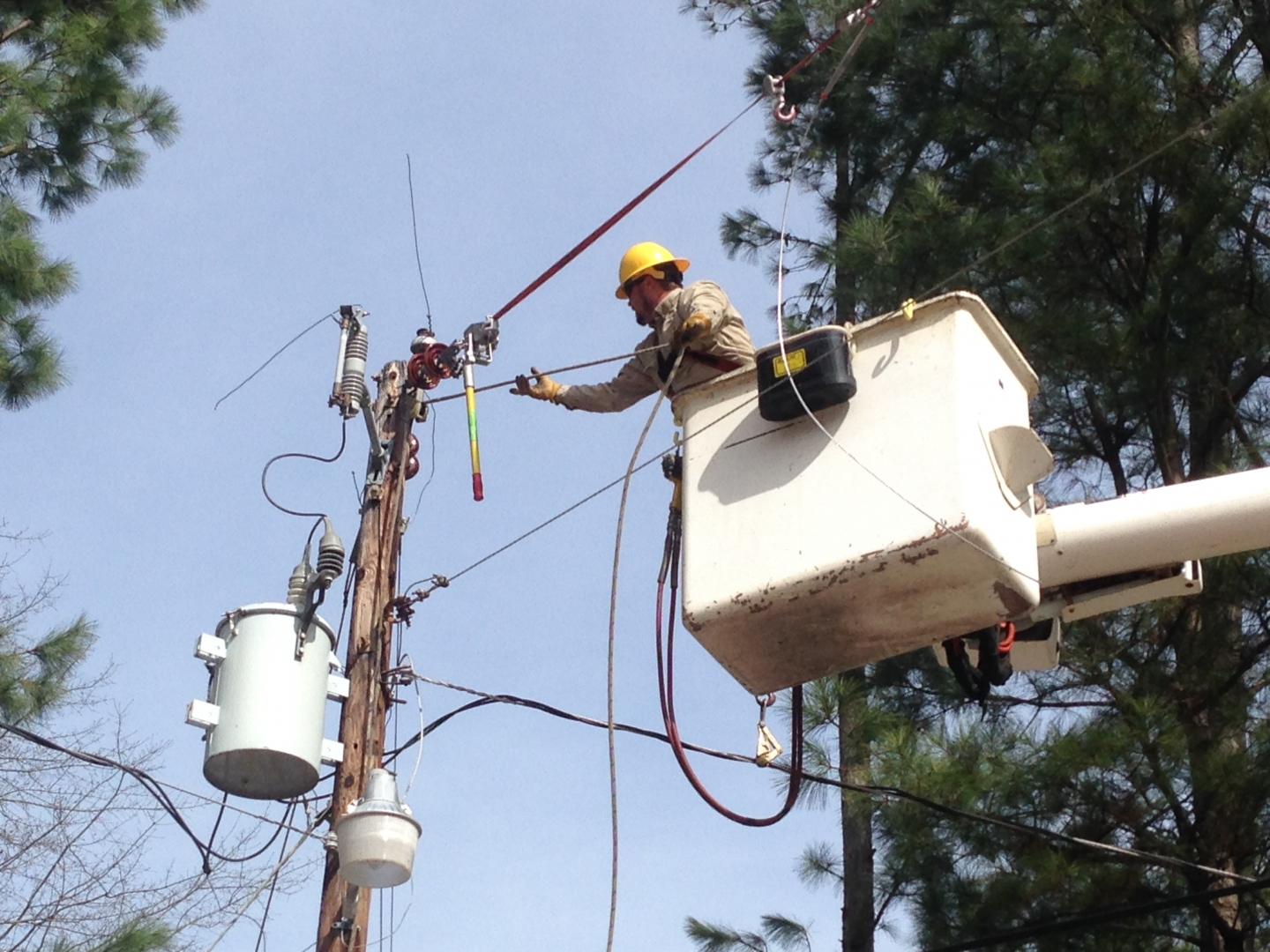
When a major storm hits, electric cooperative lineworkers stand ready to swing into action to repair power outages, often before the storm is even over.

The goal is always to safely restore power to the greatest number of customers in the shortest time possible. But more is involved than simply throwing a switch or removing a fallen tree from a power line. Peggy Dantzler, vice president of loss control and training for The Electric Cooperatives of South Carolina, Inc., compares restoring power service to getting water to flow from a spigot into and out the end of a water hose. If the spigot isn’t working or if the hose is disconnected or broken, water won’t flow to its destination. “All the pieces have to be connected,” she says.

That means assessing damage and prioritizing repairs, starting with the largest power-distribution lines and working down to the service lines that supply individual members.

Transmission lines

High-voltage transmission lines feed power from generation plants to distribution substations. They seldom fail, but they can be damaged by ice storms, tornadoes and hurricanes, preventing other parts of the system from providing power to members. Because each high-voltage transmission line can serve tens of thousands of people, repairs at these sites take top priority.

Distribution substations

Substations get power from transmission lines and carry it safely, at a lower voltage, for distribution to communities that serve thousands of consumers. A problem that can be fixed at a substation means thousands of people get their power back all at once.

Distribution lines

The distribution lines carry electricity from substations to groups of customers, like neighborhoods. When these lines are repaired, power can be restored to the homes and businesses along those lines. Again, repairs are prioritized by the number of members who can benefit.

Service lines

When others near you have their power restored, but yours is still out, it may indicate damage to a service line. Service lines deliver power to the transformers—either mounted on poles or placed on pads for underground service—that serve individual businesses, homes and schools. If you still have no power after your neighbors’ lights come back on, contact your co-op, so a service crew can check the service line.

What you can do

  • Report outages. Let your co-op know when your power is out. Also, alert the co-op if the loss of electricity affects medical equipment or life-support systems, so that those repairs can be prioritized. Use this link to find contact information for your cooperative.
  • Call an electrician. If you still don’t have power after the coop has completed all repairs, there may be damage to the consumer’s electric meter base or breaker panel that brings power into your home. The consumer, not the co-op, is responsible for repairs to these service installations. If needed, a qualified electrician can complete this work.

_____

Additional resources

#ThankaLineman – Nobody likes being without electricity following a major storm, including your cooperative’s lineworkers. They are affected by outages, too, and must leave their families behind to restore power for everyone else in the community. Let your co-op’s line crews know how much you respect their service with a message of thanks using #ThankaLineman.

Four steps to restoring power – This video, produced by the National Rural Electric Cooperatives Association, explains how crews work to repair damage after a major storm.

Geared for safety ­– When working in the adverse conditions following a storm, your co-op’s line crews rely on their gear to keep them safe. Learn more about their equipment in this short video.

generator safety

Homeowners who want to ensure they aren’t left powerless during severe storms often choose to invest in either backup or portable generators.

These emergency-power sources are designed to keep the critical necessities, like refrigeration and lighting, up and running for a short time after outages, until power can be restored. But safely installing a whole-house backup generator is not a job for a do-it-yourselfer, and running any generator safely requires attention to important details, so no one gets hurt.

“I would have a qualified electrician install it,” says Peggy Dantzler, vice president of loss control and training for The Electric Cooperatives of South Carolina, Inc. “A professional can size the generator for your house and what you need to run during a storm. That can really benefit a homeowner.”

If you choose to use a generator in the wake of a hurricane, tornado or other severe storm, Dantzler says, read the manufacturer’s instructions before installing or operating it. Be sure you know how to keep your family, your property and your local electric cooperative crews safe.

Installation

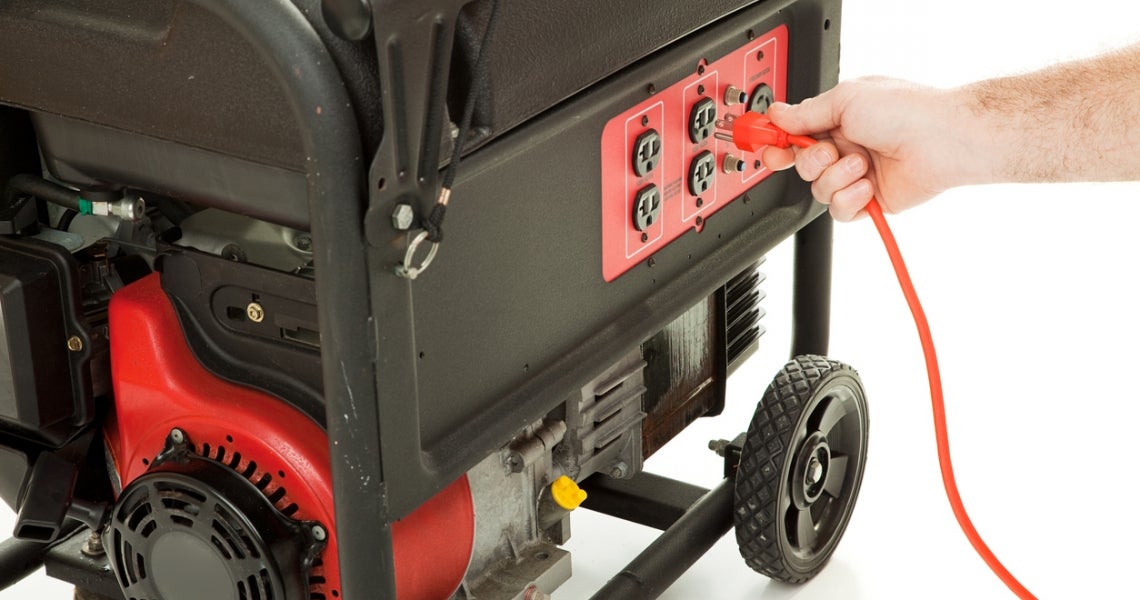
The big rule: Never plug a generator—whether permanent or portable—into one of your home’s outlets or attempt to connect directly to household wiring. This is a potentially deadly mistake. Power from a generator can “backfeed” current into power lines, risking electrocution for anyone who comes in contact with the lines—especially lineworkers trying to make repairs after a storm.

First and foremost, hire a qualified contractor or licensed electrician if you are installing a backup generator. Not only will an expert be able to advise you on a properly sized generator for your needs, he will make sure installation meets local electrical codes and that the unit is properly grounded.

A professional electrician will also install an automatic transfer switch. An ATS is able to sense when the grid electricity goes off and will automatically switch to generator power and disconnect your home’s wiring from the utility grid at that time, preventing energy from leaving the generator and backfeeding into power lines. An ATS will also protect your generator from damage when the power comes back on, shutting down the generator when it senses that a sustained current flow has been restored.

Lineworker safety

Whenever a severe storm leads to power outages, electric cooperative lineworkers are on the scene as soon as weather permits to get the lights back on. While they are well trained in safety measures, the members they serve can sometimes put lineworkers’ lives in danger through faulty generator use.

Any generator that has been improperly wired into a home’s electrical system poses a threat to the crews repairing lines after a storm. Electric current that is backfeeding into the power grid from those generators can energize even power lines that are thought to be dead. Lineworkers can be electrocuted by coming in contact with these lines.

In 2005, a Georgia lineman died after coming in contact with a power line that was energized by an improperly installed generator. He was working to restore power after Hurricane Dennis hit Alabama.

Making sure a licensed electrician has installed an automatic transfer switch to isolate your generator from the grid is one way members can help protect those working to restore the power. You can also notify your electric co-op if you have installed a generator for emergency use.

Carbon monoxide

Carbon monoxide (CO) is a colorless, odorless and tasteless but highly poisonous gas. Called a silent killer, it can go undetected without a CO alarm and can be fatal within minutes. More than 150 people in the U.S. die every year from carbon-monoxide poisoning, according to the Consumer Product Safety Commission.

In the month after Hurricane Katrina in 2005, the Centers for Disease Control reported 51 cases of carbon-monoxide poisoning—five fatal—among residents of Alabama, Louisiana and Mississippi, nearly all from improper use of generators. At least a dozen South Carolinians were treated for carbon-monoxide poisoning after using generators following Hurricane Matthew in 2016.

Because carbon monoxide can build up quickly where generators are in use, generators should never be operated in enclosed spaces, including attached garages. The CO gas can seep into homes and reach deadly levels. Opening windows or attempting to dispel fumes with fans is not effective against this buildup. That’s why generators must always be located in open areas a safe distance away from residential spaces—at least 15 feet, but more is better—and away from windows and doors. Have a working, battery-operated CO detector in your home if you use a generator.

Symptoms that may arise after carbon-monoxide inhalation include headaches, dizziness, weakness, nausea, vomiting, chest pain and confusion. Severe exposure can lead to loss of consciousness and death. If your CO detector sounds an alarm, get everyone out of the house immediately. Get medical care for anyone experiencing symptoms, and tell the doctor there was possible inhalation of carbon monoxide.

Operation

Generators can be powered by a variety of fuel sources—natural gas, propane, diesel, gasoline. Regardless of the type of generator or fuel being used, safe operation begins with understanding your model. Read the manufacturer’s instructions first before installing or operating your generator for the first time.

Other safety tips:

  • Never use a generator indoors or in enclosed spaces or in attached garages.
  • Don’t plug the generator into a household outlet.
  • Don’t overload your generator. The manufacturer’s instructions will specify your model’s wattage capacity; make sure the total wattage of the appliances you plug into the generator do not exceed that capacity.
  • Use the proper electrical cords. Extension cords should be sized to carry the electric load. Heavyduty, outdoor-rated cords are best. They should have grounded, three-prong plugs and should be in good condition, with no fraying or cuts.
  • Keep the generator dry. To avoid the risk of shock, the generator must remain dry. Locate it on a dry surface, under cover of an open canopy to protect it from precipitation. Make sure your hands are dry before operating it.
  • Keep children and pets away from generators to avoid burns.
  • Unplug appliances before shutting down the generator. Make sure all equipment being powered by the generator is off and unplugged before powering down.
  • Never refuel while the generator is running. Turn it off and let it cool down. Fuel spilled on a hot generator can ignite a fire.
  • Keep a working fire extinguisher nearby when the generator is in use.

_____

Additional resources

For more tips on choosing and using a generator safely, see the American Red Cross page Safe Generator Use.

food safety

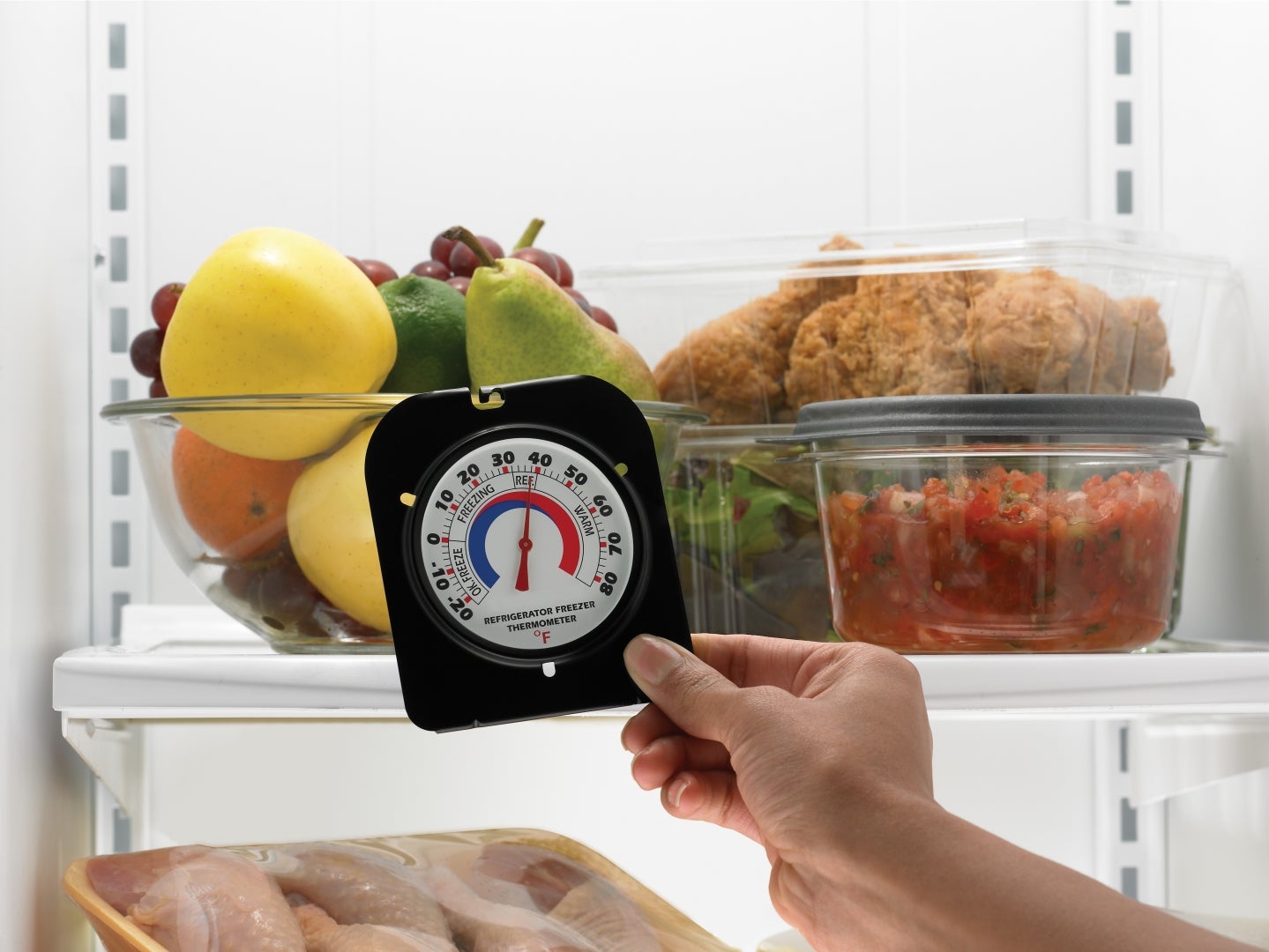
Photo courtesy of USDA

Storm-induced power outages can take you by surprise. If you’ve lost power and have a refrigerator full of food, make sure time and temperatures are on your side.

If your home’s power is interrupted for two hours or less, losing perishable foods shouldn’t be a concern. When an outage is prolonged, it’s time to decide when to save and when to toss food away. 

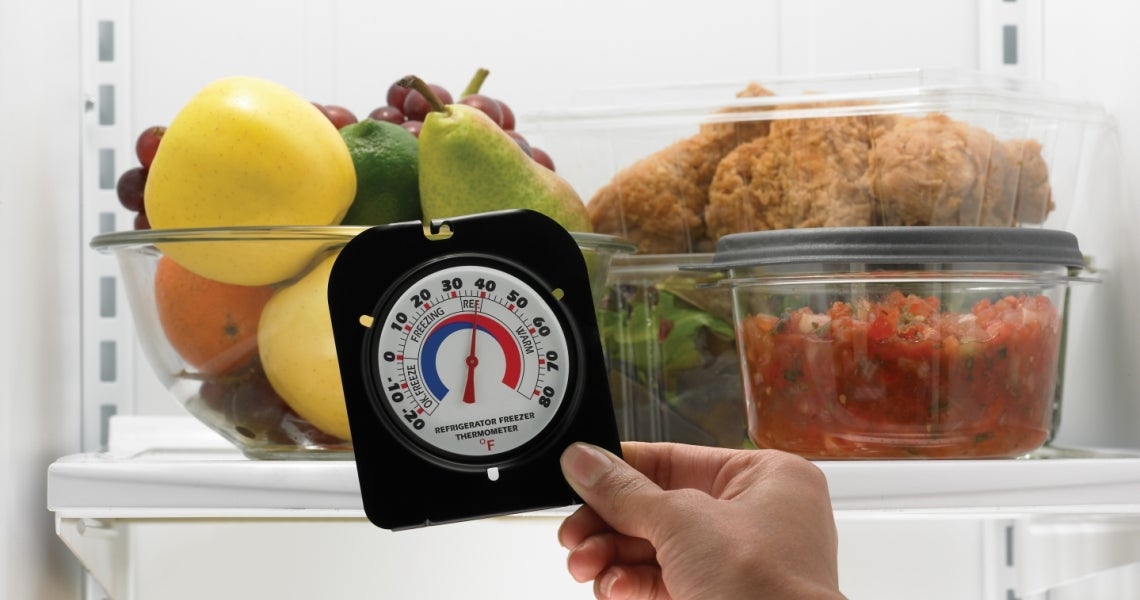
A digital quick-response thermometer can be one of the most useful tools you can wield in your battle to preserve food. The gadget checks the internal temperature of food, ensuring items are cold enough to eat safely.

Use these food safety tips to help you minimize food loss and reduce the risk of foodborne illness:

Refrigerated food

  • Keep refrigerator doors closed as much as possible. An unopened refrigerator keeps food cold for about four hours.
  • If food (especially meat, poultry, fish, eggs, and leftovers) has been exposed to temperatures above 40 degrees Fahrenheit for two or more hours or has an unusual odor, texture or color, get rid of it. Remember the American Red Cross food safety rule: “When in doubt, throw it out.”
  • Never taste food to determine its safety or rely on appearance or odor.
  • Use perishable foods first, then frozen food.
  • To keep perishable foods cold, place them in a refrigerator or cooler and cover with ice.

Frozen food

  • A full freezer stays colder longer. Freeze containers of water to help keep food cold in the freezer. If your water supply runs out, melting ice can supply drinking water.
  • If you keep the door closed, a full freezer keeps the temperature for approximately 48 hours (24 hours if it is half full).
  • If food in the freezer is colder than 40 degrees Fahrenheit, is partially thawed, and has ice crystals on it, you can safely refreeze it.
  • Always discard frozen or perishable food items that have come into contact with raw meat juices.

Find more tips at FoodSafety.gov.

Sources: American Red Cross, U.S. Food and Drug Administration, U.S. Department of Agriculture

_____

Additional resources

Food safety in a power outage – See detailed charts on how long different refrigerated and frozen food will last at https://www.foodsafety.gov/keep/charts/refridg_food.html and https://www.foodsafety.gov/keep/charts/frozen_food.html.

pets

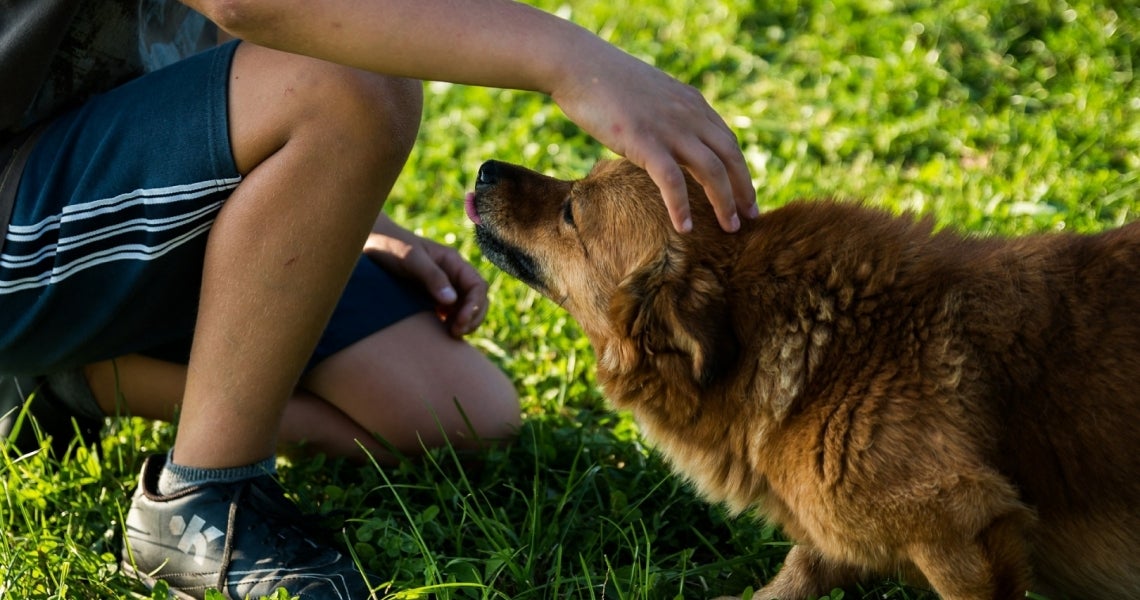
Pets are a precious part of the family. So, when you’re making evacuation plans in advance of a major storm, be sure you have a plan for getting your pets safely out of your home, too.

A critical detail to remember is that emergency shelters often do not accept pets (exceptions are made for service animals). Before you evacuate, try to find family members or friends who can care for your pet while you are out of your home. If you have multiple animals, they may require different shelter options. Check with your veterinarian or local animal shelters for recommendations for pet accommodations. Keep those phone numbers handy, and call ahead to ensure space is available.

You can also visit pet-friendly-hotels.net to find lodging options that accept pets. If necessary, call pet-friendly hotels for reservations before you leave home.

Once you’ve identified safe lodgings for your pets, you need to be prepared to travel with them on short notice.

Make sure your animals have reliable ID—either a secure ID tag on a collar or a microchip (ask your vet about this). If your pet gets lost or separated from you, an ID will help you be reunited. A current photo and copies of up-to-date immunization records may also be helpful to have on hand.

Portable cages or pet carriers will provide a safe space for your animals to travel in, and they are a convenient way to keep them safely contained wherever you decide to shelter. 

You may have packed an emergency storm kit for your family, to be prepared for a quick exit. Pack one for your pet, too, and make sure it’s easy to get to when it’s time to go. Include the following:

  • Leash/harness
  • Food and water bowls
  • 3-day supply of food and water
  • Manual can opener for food, if needed
  • Medications
  • Health records and special care instructions
  • Veterinarian contact information
  • Litter box/clean-up supplies
  • Portable bedding
  • Favorite toys

As soon as you know you’ll be evacuating, locate your pets and keep them indoors, so you won’t have to spend time finding them when it’s time to go.

After the storm, when you return home, be alert for debris, damaged fencing, flooding or other hazards that may be harmful to pets. Watch your animals closely; they may be disoriented, aggressive or defensive after sudden changes to their routines. If problems persist, consult your veterinarian.

Find more helpful details by downloading the South Carolina Hurricane Guide and visiting scemd.org/prepare/your-emergency-plan/pet-planning.

_____

Sources: American Red Cross, S.C. Emergency Management Division’s “South Carolina Hurricane Guide”

hurricane

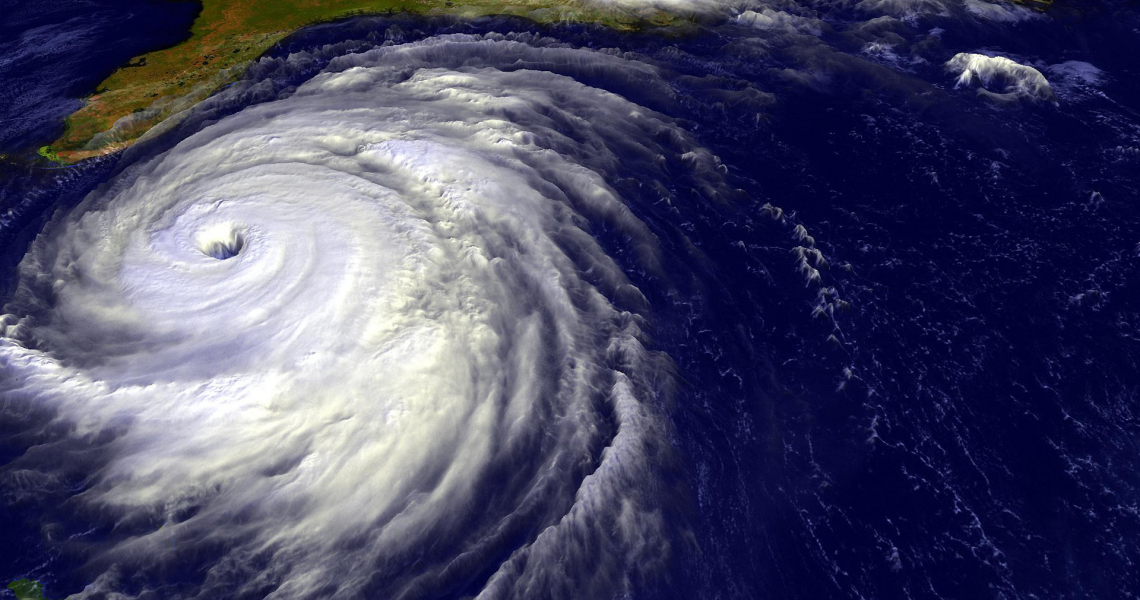
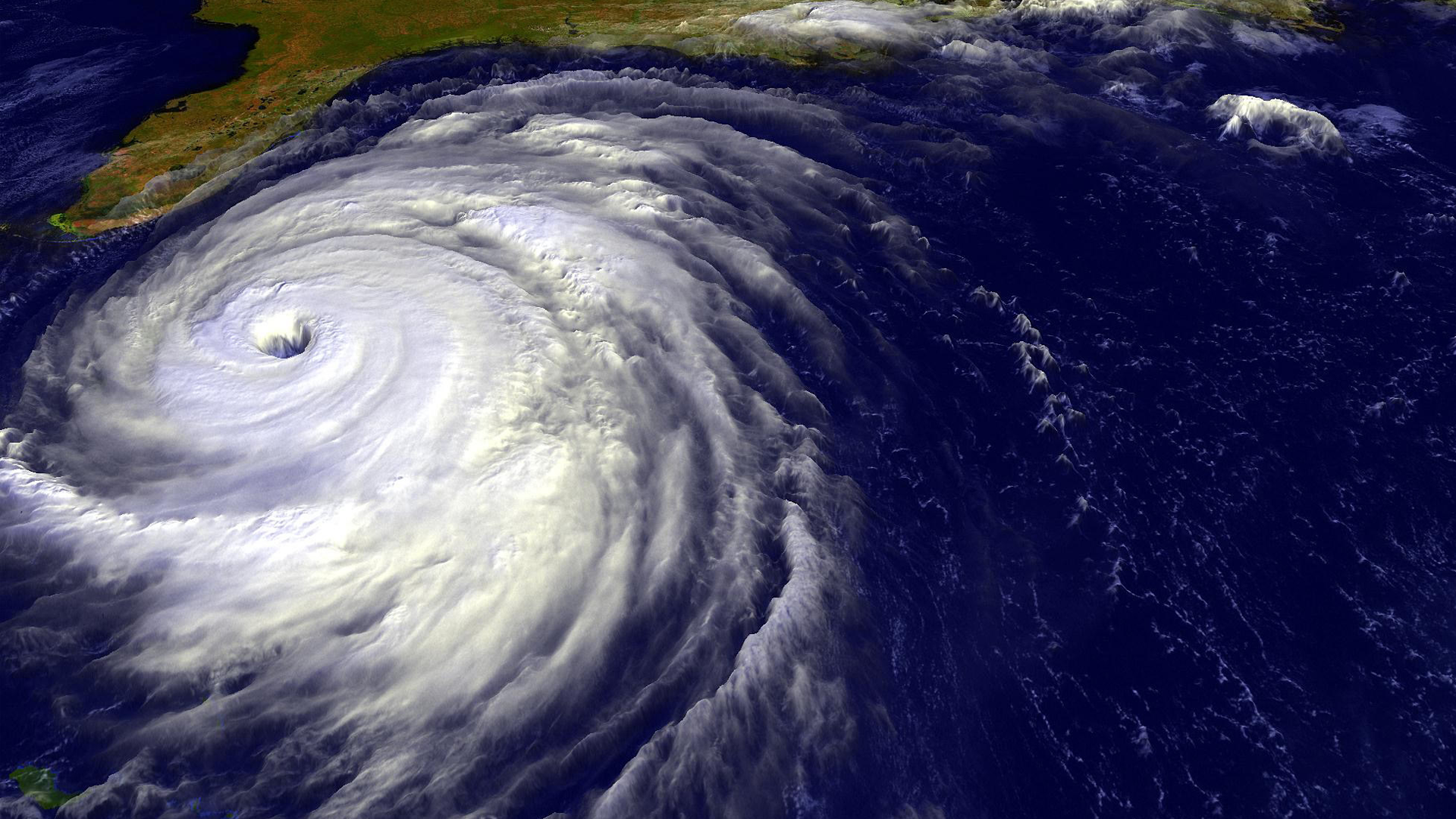
Be prepared before a hurricane strikes. Find out 6 vital ways to be ready.

6 VITAL ways to be ready

1. Develop a preparedness plan well before a hurricane actually threatens your area. If possible, make arrangements to stay with the friend or relative who resides closest to your home and who will not have to evacuate.

2. While you’re at it, build a disaster supply kit. Your kit should include enough ready-to-eat nonperishable food and water for three to seven days, along with a handcrank can opener, disposable plates, utensils, blankets, pillows, bed linens, first-aid kit, prescription drugs, flashlight, batteries, fully charged cell phone, corded phone, cash including small bills, credit cards, keys, books, and a watertight container for insurance papers, social security cards, bank account numbers and medical records. You’ll also need pet care items and a full tank of fuel.

3. Select an evacuation destination that is nearest to your home. If ordered to evacuate, do not wait or delay your departure. Keep in mind that the hotels are likely to be filled very quickly in a hurricane evacuation event.

4. Be prepared to wait in traffic. The large number of people who must evacuate will probably cause massive delays and major congestion.

5. If a hotel or motel is your final intended destination during an evacuation, make reservations before you leave. Most hotels and motels will fill quickly. The longer you wait to make reservations, even if an official evacuation order has not been issued, the less likely you are to find vacancies.

6. If you are unable to stay with friends or family and no rooms are available, then go to a shelter as a last resort. Remember, shelters are not designed for comfort and do not usually accept pets. Bring your disaster supply kit with you to the shelter. To find pet-friendly lodging, log onto petswelcome.com.